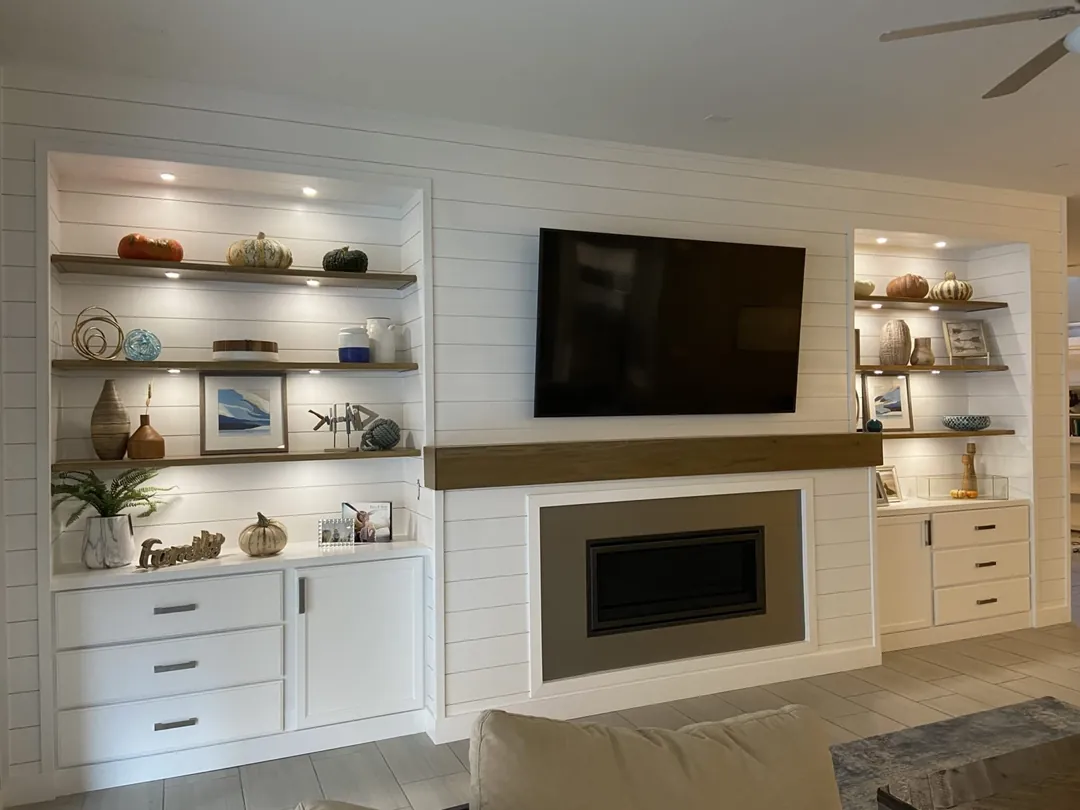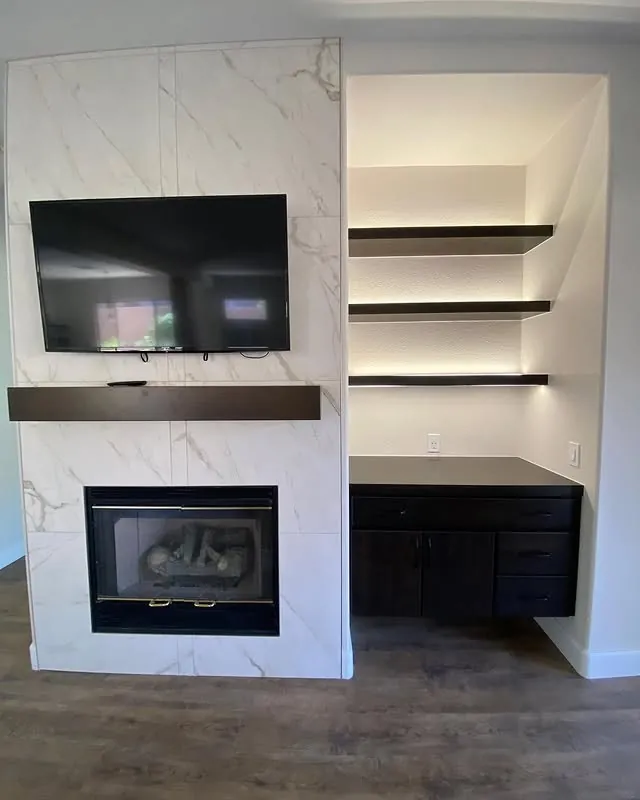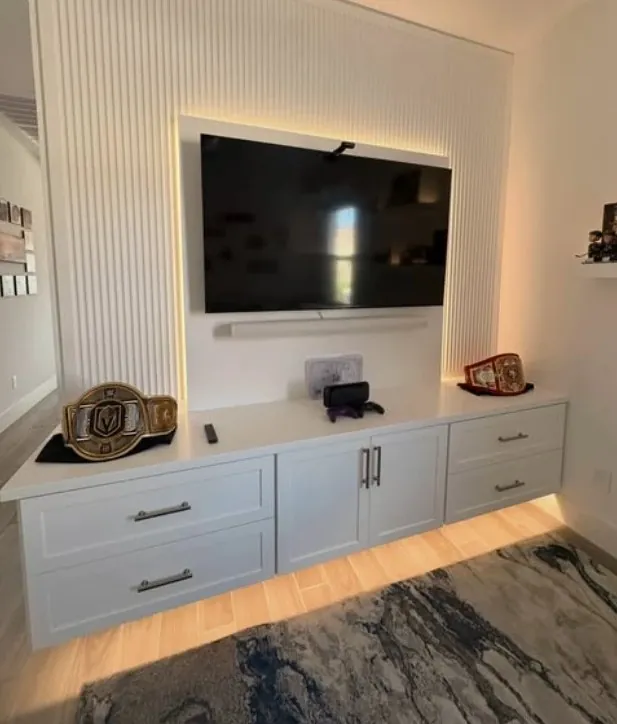
The cabinets, cladding and shelves are finish work
The City of Las Vegas homeowner's guide, “When do I need a permit?”, lists “painting, papering, tiling, carpeting, cabinets, countertops, interior wall, floor or ceiling covering, and similar finish work” as work that doesn't need a permit. Most of what makes a media wall look like one sits inside that sentence.
JB Custom Design's media walls show the range: MDF shiplap with a 9′ box mantel in Henderson, Calacatta Oro porcelain up a fireplace beside a floating media cabinet in Gemini hazelnut stain, and a fluted panel behind a floating cabinet in a kids' den. The carpentry and tile in walls like these are finish work under the city's list. The lighting is where the wiring questions start (it usually is).
Outlets, lights and new wiring: where the permit comes in
On a media wall the electrical work is usually a recessed outlet behind the TV, lights built into the shelves or niches, and sometimes a wall switch. The city's guide says a permit is required to:
- Install or alter any permanent wiring or electrical device.
- Run additional wiring to put in an electrical outlet or light fixture.
- Install, upgrade or change outlets “for decorative purposes.”
Cable TV, speakers and low-voltage wiring
The guide also lists electrical work that doesn't need a permit, including low voltage wiring for “garage door openers, cable TV, or burglar alarms,” phone outlets and community access TV (both with listed type wire), and replacing a broken or damaged outlet like for like.
Speaker wire, HDMI runs and low-voltage LED strips aren't named either way. Ask the building department about your plan before reading the cable TV line as a blanket pass. It's one short line, and people ask a lot of it.
Electric fireplaces: plug-in, hardwired and the circuit question
A built-in electric firebox can often be plugged in or hardwired, and its installation manual sets much of the electrical plan. Dimplex's guide for its Revillusion built-in fireboxes is a good example. It recommends “a dedicated, properly fused 15 Amp circuit,” and says a dedicated circuit “will be required if, after installation, the circuit breaker trips or fuse blows on a regular basis when the heater is operating.” The unit can be hardwired with a wall switch; if you use the plug, the manual says to plug it “directly into an appropriate wall receptacle,” with no extension cord.
The manual also says “all wiring must be completed prior to installing the built-in electric firebox,” so the outlet or circuit has to be on the plan before the wall is closed. A new outlet or circuit in the wall is new wiring under the city's list. The city's exempt list does include “portable heating appliances,” which describes a space heater better than a firebox framed into a wall, so ask the building department about the exact unit and how it will be powered.
Two more lines in the same manual shape the room. The firebox “does not require any special venting,” and furniture, pillows, curtains and other combustibles should stay at least 3 feet from its front. That decides where the sofa can go. Other brands and models set their own rules, so read the manual for the unit you're buying before the cabinets are drawn.
Gas fireplaces, licensed trades, and Henderson
Gas has its own list. In the City of Las Vegas a permit is required to “install, alter or repair gas piping between the meter and any appliance,” to install or change any part of an unvented decorative appliance, and to install appliances that are required to be vented. Many media walls keep the existing fireplace unit and change everything around it: the surround, the mantel, the cabinets either side and the lighting. If the unit or its gas line changes, check the permit first.
Judy plans the media wall with the wiring in mind, so the outlet, the lighting and the firebox circuit are on the drawing before the cabinets are built and the right trades are booked in the right order. Henderson, North Las Vegas, Boulder City and unincorporated Clark County run their own building departments; Clark County's permit page points to its building administrative code for exemptions. Check with the building department for your address before the wall is opened.
“Along with homeowners working on their own homes, only licensed plumbers and electricians are legally allowed to do plumbing or electrical work in Nevada.”
What to do this week
List every powered thing that will live on the wall: TV, soundbar, streaming box, fireplace, shelf lights. Then find the model number of the fireplace you like and download its installation manual. Those two pages answer most of what an electrician, a building department and a designer will ask first.
When you're ready, book a consultation. Judy looks at the fireplace and the room during the 90-minute in-home meeting and designs the wall around what works for it.
Rules change and differ by jurisdiction. This guide is general information, not legal advice: confirm with your building department and the Nevada State Contractors Board for your project.