Why wood moves
Wood takes on and gives off moisture to match the air around it. As it does, it swells and shrinks slightly, mostly across the grain rather than along it. That's normal, and good cabinetry is designed to allow for it: door panels that can float in their frames, finishes that seal the wood, and joinery that holds as the wood moves.
In a very dry climate the swings can be noticeable, especially between a closed-up summer house running air conditioning and a winter house running heat.
Where you might see it
None of these mean a cabinet is failing. They're the ordinary behaviour of wood, and choices at the design stage can make them less likely or less visible.
- A fine line at the joint where a painted door's frame meets its panel.
- Small changes in the gaps between doors through the year.
- Solid wood tops that cup slightly if one face is sealed and the other isn't.
Choices that help
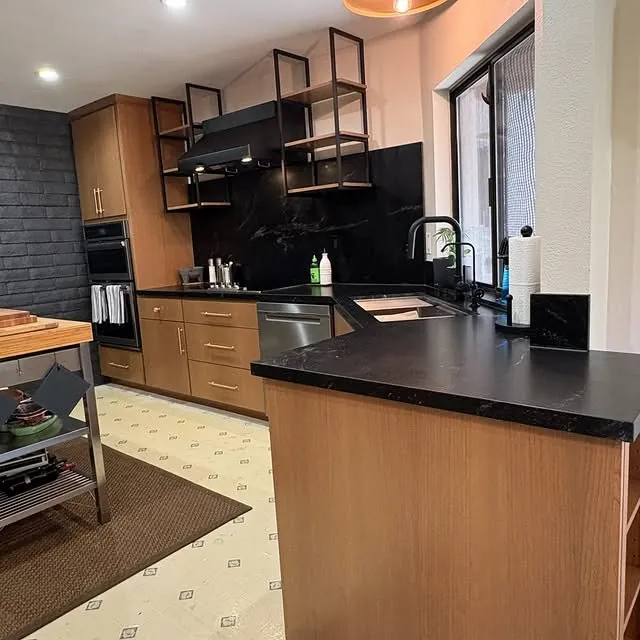
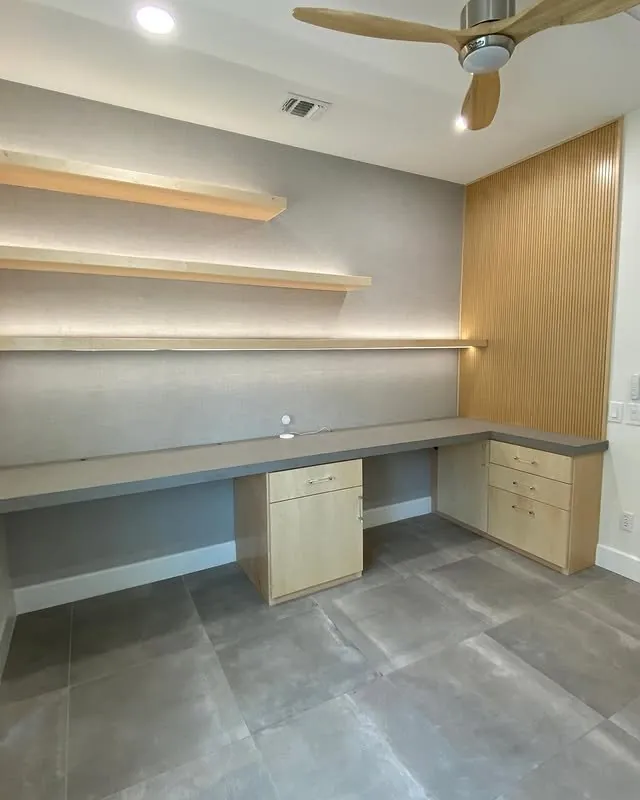
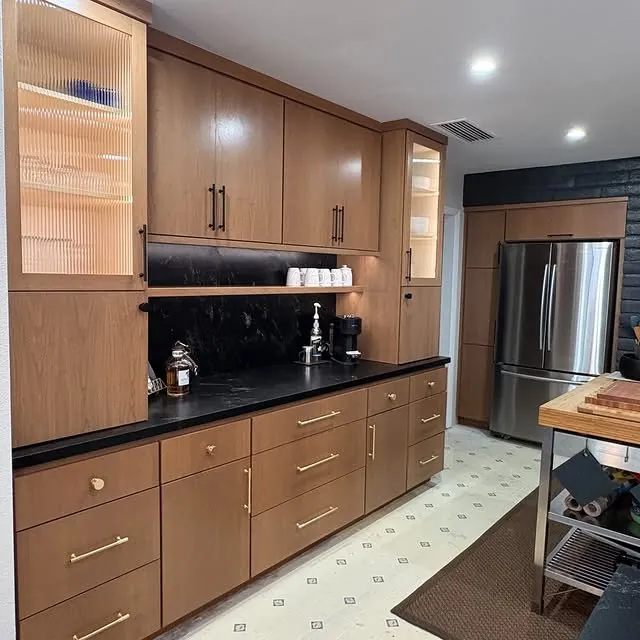
Door style matters: slab doors and stained finishes tend to hide seasonal movement better than painted five-piece doors, where a hairline at the joint shows against a solid colour. Finish matters: a properly sealed finish on all faces slows how quickly wood reacts. Location matters: cabinets by a sunny west-facing window or beside a heat source live a harder life than an interior wall.
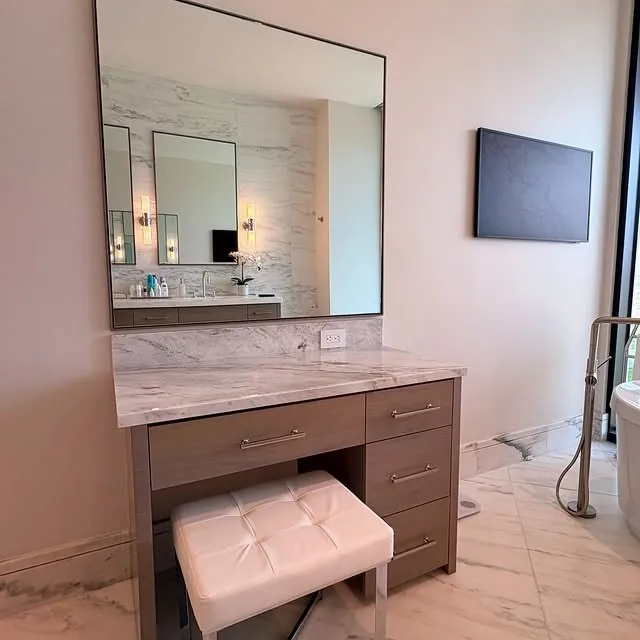
Judy chooses wood species, door styles and finishes with clients during design, from clear natural maple to walnut with a translucent grey stain, toasted pecan slab doors and painted shaker.
Garages and hot rooms
Garages and rooms that aren't climate-controlled are a different case: summer heat in a closed Las Vegas garage is extreme. Cabinetry for those spaces needs materials chosen for it, which is a conversation to have before anything is ordered.
Rules change and differ by jurisdiction. This guide is general information, not legal advice: confirm with your building department and the Nevada State Contractors Board for your project.